Removal, trimming, defensible-space clearance, and stump grinding at the headwaters of the Okefenokee.
Call (555) 555-5555Or call — we answer. No obligation, honest advice.
Waycross got its name from the rails — six lines crossing at one point — but the town's real geography is written in trees. Ware County is timber country pressed up against the Okefenokee: slash and longleaf pine on the sandy uplands, live oaks in the old neighborhoods, and pond cypress where the ground goes black and wet toward the swamp. That's a lot of standing fuel, a lot of standing shade, and a lot of standing risk, depending on the season you ask.
Reliable Waycross Tree Service works all three. Removals when a pine's number is up, trimming that keeps limbs off roofs and away from lines, the defensible-space clearing this county learned to take seriously, cleanup when a storm comes calling, and grinding that closes out every removal properly.
Free written estimates, cleanup in the price, phones that get answered. Call (555) 555-5555.
April 2007: a tree came down on a power line southwest of town in high wind and drought, and the fire it started merged with a lightning strike out of the swamp to become the largest wildfire south Georgia has ever recorded. Crews bulldozed a twelve-mile break to keep it out of Waycross. Twenty-two homes were lost anyway; more than a thousand people evacuated.
One tree, one line, one dry spring. Nowhere else in Georgia is the case for managing trees near power infrastructure written that plainly into local memory.
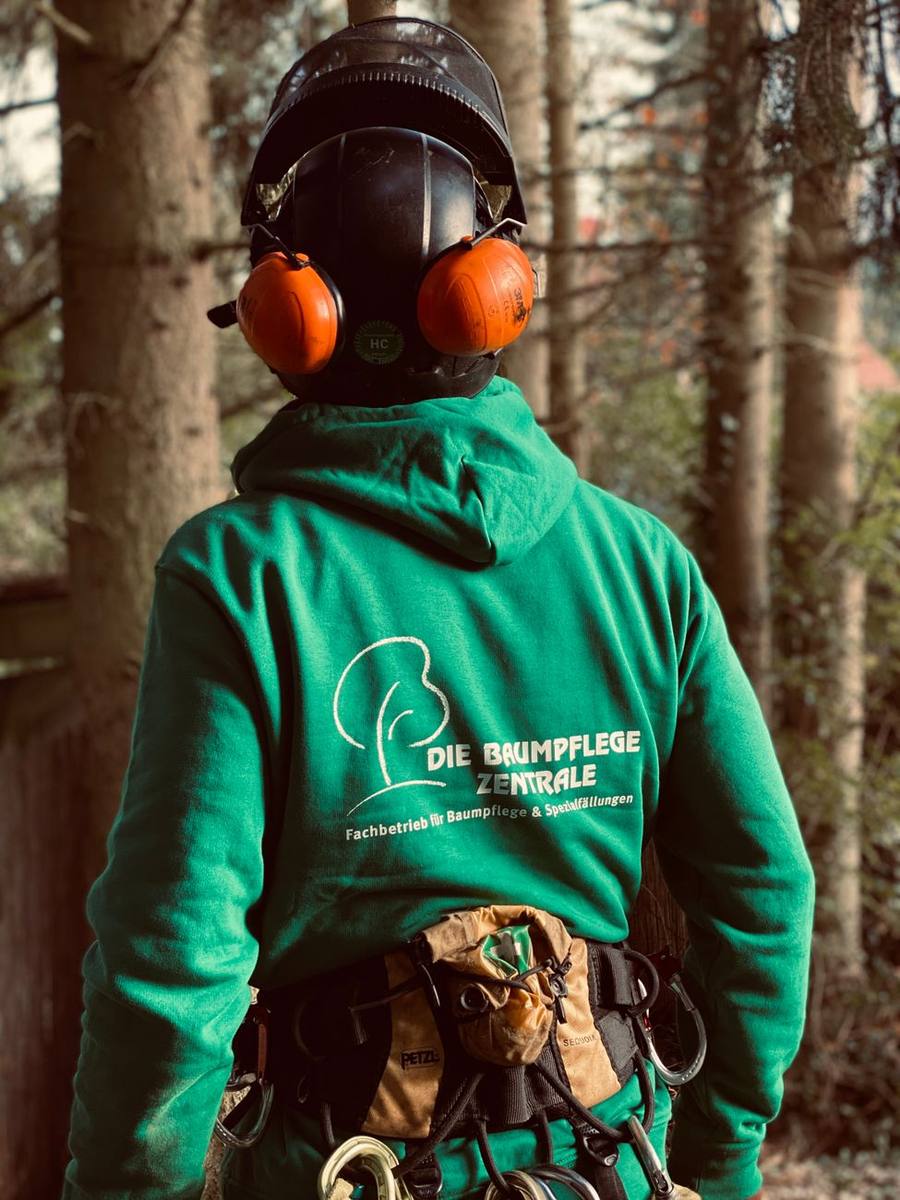
Three services carry a Ware County property through fire seasons and storm seasons alike. Each links to its own page.
Dead, dying, and dangerous trees down in sections — including the tall pines that dominate every skyline in the county.
Clearance over roofs, drives, and service drops, deadwood out of crowns, and defensible-space limbing where woods meet homes.
Stumps ground below grade so yards mow clean — and so dry stump wood stops being tinder next to the house.
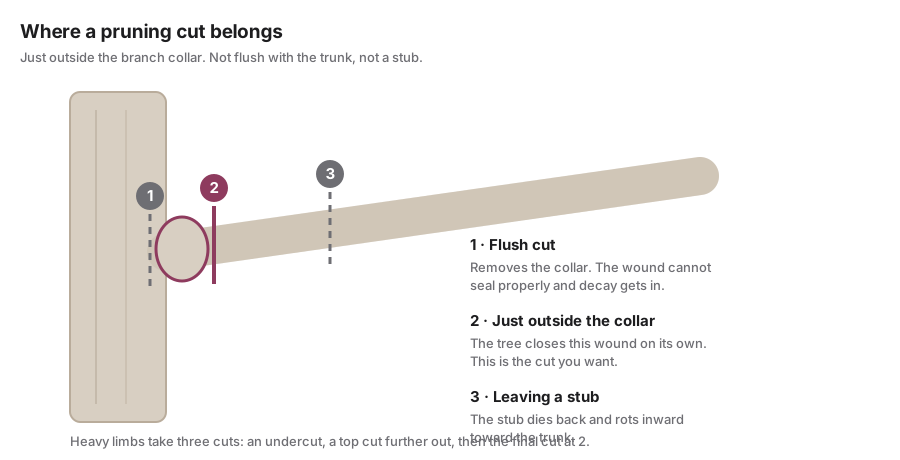
A tree heals at the branch collar, the swollen ring where limb meets trunk. Cut just outside it and the wound closes; cut flush or leave a stub and the tree carries an open door for rot through every humid Ware County summer that follows.
On pines the stakes compound, because bad cuts and broken stubs weep resin and stress the tree — and a stressed pine in this county is a beetle target, and beetle-killed pines standing dry are exactly the fuel nobody here wants more of.
Clean cuts, modest amounts, never topping. It's tree health, and around here it's fire hygiene too.
The 2007 fires — and the West Mims fire that burned a hundred and fifty thousand acres out of the refuge in 2017 — taught this county what most of Georgia only reads about: where pine woods meet neighborhoods, the trees around a home are part of its fire outcome. The principles are straightforward and this is the county to apply them in.
Keep the first thirty feet around the house lean: limbs off the roof, crowns not touching the walls, dead material gone. Limb mature pines up so a ground fire can't ladder into the canopy. Take out the dead standers — a beetle-killed pine is a torch waiting for a reason. Break up continuous brush and volunteer growth between the woods line and the yard. None of it means clear-cutting your shade; it means editing the fuel so your home isn't the easiest path a fire can take.
The dry springs are the season that matters. The Okefenokee's fires historically break out in spring drought — April and May — which makes late winter the right time to walk the property and do the editing. After the lightning starts, it's too late to be trimming.
And the lesson of 2007 in one sentence: any tree that could reach a power line in a fall deserves professional attention before the wind decides for it. The utility handles their primary lines — call them for those — but the trees threatening your service drop and your own lines are yours to manage, and this county knows better than anywhere what's at stake.
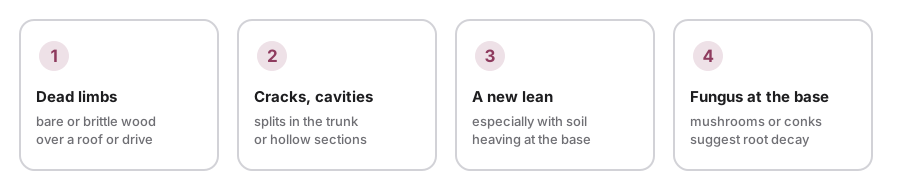
Dead limbs, cracks or cavities, a fresh lean, and fungus at the base — and in Ware County, add a fifth: browning needles on a pine, the beetle flag that means call now.
The same sequence for a limb over a porch on Tebeau Street or a dead pine row out toward Manor.
Someone looks at the actual trees and writes the number down, cleanup and hauling included from the start.
Which trees, which limbs, how the wood leaves — settled before a saw starts, changed only by conversation.
Debris chipped and hauled, ruts avoided, the yard raked. In this county, cleanup isn't cosmetic — loose dry debris is fuel.
September 2024 put Ware County on the other end of the disaster spectrum. Helene came through with the whole county's power grid as a casualty — twenty-two thousand of twenty-four thousand customers dark, trees down on streets across Waycross, the fire station headquarters itself damaged, and a firefighter in neighboring Blackshear killed by a falling tree. Residents called it worse than anything they'd expected, and the cleanup ran for months, punctuated by a tornado through town the following spring while people were still patching roofs.
The storm's tree lesson matched what every hurricane teaches: the failures concentrated in trees carrying visible defects — deadwood, cracked unions, leaning trunks in rain-soaked ground. The prepared crowns mostly held. In a county whose trees face both fire and wind, the same maintenance serves both threats: deadwood out, weak structure corrected, dead standers down.
After any storm, the standing rules apply. Photograph damage before touching it. Leave tensioned and hung wood to professionals — post-storm cleanup injures far more people than storms do. And verify every crew that appears at the door, because they will appear: Georgia has no state tree-work license, so an insurance certificate sent directly from the insurer and local references are the entire safety net. Waycross has seen enough disaster traffic to know the difference between help and hustle.
Based in Waycross and covering Ware County — the in-town neighborhoods along the rail corridors, the communities out US 1 and US 84, and the properties where the pine woods run right up to the yard.
Blackshear and the Pierce County side get covered too. If you're close, call — the answer is almost always yes.
Headwaters of the Okefenokee, crossroads of six rail lines, and the seat of Ware County in Georgia's deep pine country.
Slash and longleaf pine built this county's economy and still dominate its skylines, and most of the tree work here runs through them. They grow tall, fast, and straight — and they fail in characteristic ways: shallow roots levering loose in saturated sand, tops snapping at old damage points, and beetle kills that turn a green tree brown in a season and leave it standing dry.
The management rhythm is simple. Watch for browning needles and pitch tubes — beetle sign moves fast and spreads to neighbors. Take dead pines down promptly rather than letting them season into hazards. Limb the tall ones near structures so neither wind nor fire has a ladder. And near the swamp edge, respect the cypress and hardwoods for what they are — different trees with different rules, in ground that swallows equipment that doesn't plan for it.
Wet-ground access is its own local skill: matting, routing, and timing so a removal at the yard's soft end doesn't leave scars deeper than the stump.
A browning pine, a limb over the service drop, storm wood still down from last season, a woods line creeping toward the house, or a stump field that needs to be lawn again — call (555) 555-5555 and describe it. Free written estimate, real arrival window, cleanup included.
In a county that's been burned and blown both, the trees that cause trouble always announced it first. The estimate is how you hear the announcement.
Tell us what you need and we'll get back to you with a real answer. If it's an active backup or standing water over the field, calling gets you a faster response.
Call: (555) 555-5555
Area: Waycross, GA and Ware County